Class Reflection #1: PSII
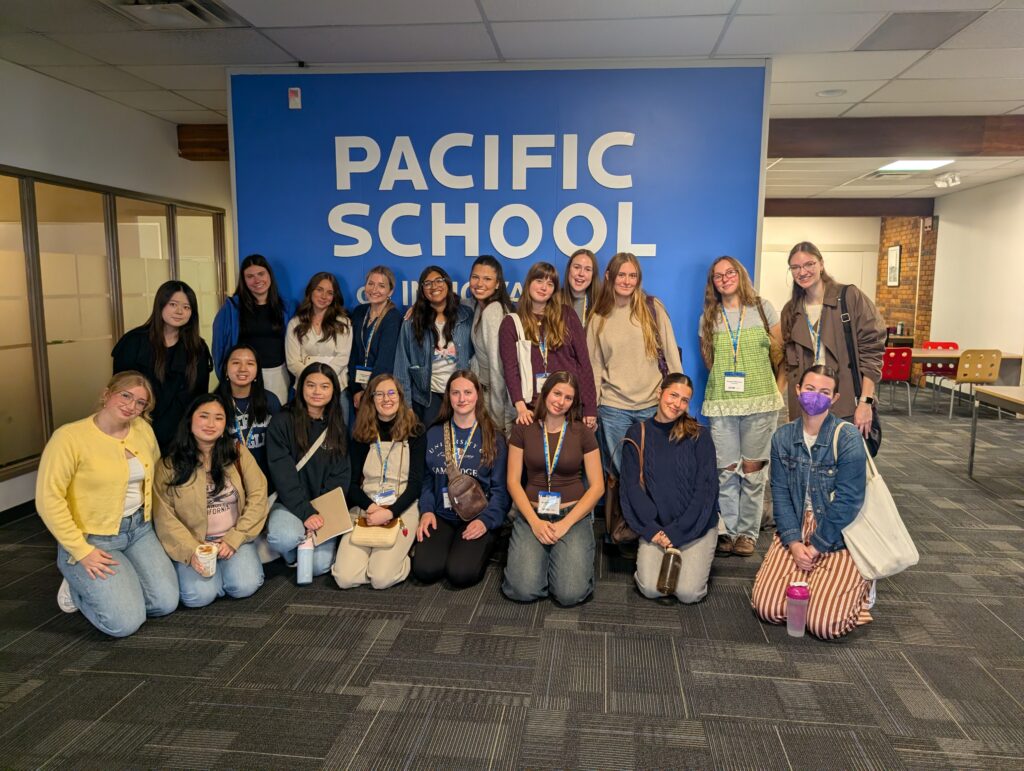
As a class we had the opportunity to take a field trip to the Pacific School of Innovation and Inquiry (PSII) located in Downtown Victoria, where we were welcomed and hosted by Jeff Hopkins (Founder, Principal Educator & Director of Engagement). Prior to this visit we watched a documentary on another innovation school (High Tech High) that led us to connect and discuss aspects of this type of learning because it was mostly a new approach, however had us generating questions and perspectives to bring to our PSII visit.
What?
I have been familiar with PSII even prior to our visit because some of my friends attended and provided insight into their experiences but not the full picture we received when we went. It felt like a very valuable experience to be able to ask Jeff many questions, understand how this type of school functions and is formatted from day to day in the role of students and their teachers. I was a bit of a skeptic at first, raising questions in my head that I’m sure most of us had – How are the students reaching all core areas of learning / subjects if they’re focusing on an inquiry that may not touch all points? How are the students being graded / assessed? The inquiry approach is great for learning, but what about University where that approach is not a central aspect? etc. Jeff broke down how this school works and provided thoughtful answers to our questions that personally turned my skepticism around. He assured us that the students are being guided through their discovery and are ensured that they meet all points in the BC Curriculum discussed in student – teacher meetings, granting that the students also graduate with a Dogwood Diploma (the same one all BC high school students graduate with despite the differences in this type of learning).
I’ve jumped ahead of myself! Lets go back to the beginning:
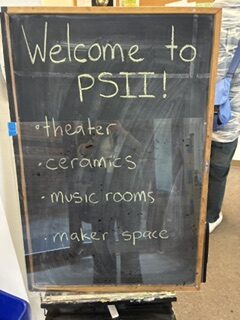
After we all met outside the entrance of the school, Jeff led us inside to the board room, where a presentation was set up and all introductions and part of the questions occurred, then Jeff gave us the grand tour of the school he founded back in 2013. We stopped in various locations of the school to hear about the space and take it in. I noted how the layout of this school (being in central downtown) wasn’t designed anything like a public school – sure you had large tables and offices to conduct the meetings, but the space was very open and reminded me of a communal space in a public library (in a good way) – it could have been the absence of traditional classrooms. There is also space for the hands-on tasks such as a music room to record or learn music / instruments, a pottery corner with clay and wheels, a small stage equip with lights and microphones, a drawing room, a textiles corner and a room for the supplies, a workshop with tools, a science lab with the standard equipment, and a kitchen with all the cooking necessities.
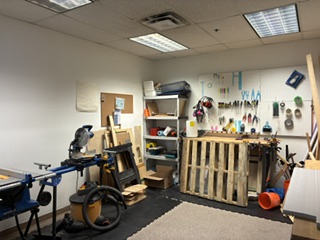
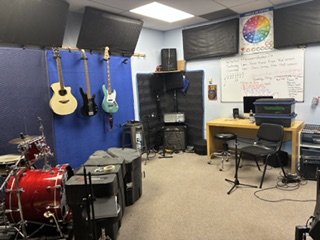
Then we were free to venture around the school and take note on these differences between PSII and public schools. I had the chance to speak to one of the students and their teacher – for privacy reasons I will not mention the student or teachers name, or the inquiry project they work on for it is their project to share, however I can say that it was fascinating and had me questioning whether I would have thrived in an inquiry based learning environment like this. Parting from that thought we eventually met back in the board room for any additional questions and I left with a whole new perspective on the alternatives there are to the “traditional ways” of education and how I see my role as a future educator in a system that is always changing… or sometimes not.
So What?
This visit broadened my scope on what education can look like, but why does it matter? As we learn about the art of this profession and creating a safe classroom space that welcomes all students and their learning, we may be more wary or hesitant to try new things especially with the minimal experience we have when we first start out. So witnessing and learning about alternative or different systems, adds ideas and resources to our “teacher toolbox” that may build confidence to try those new things such as the inquiry approach or utilizing student autonomy.
Now What?
This experience and understanding the possibilities had me thinking that even if I teach at a public school, there are aspects that I will take away and modify or use in the classroom. One being the inquiry. In my own school experience, I felt inquiry projects were more focused on what we already learned rather than us doing the deep dive into the learning – yes we came up with the topic and the inquiry related to the core subject / unit, but we were limited by time and or resources as to how we could express or present our work, taking out the hands-on experience which is replaced by a web-research based inquiry. In saying that, I can keep this in mind and create more flexible criteria that allows more freedom for the students to explore multiple pathways and perhaps extend the timeline to be more achievable for the middle and elementary years.
Overall this experience has been an eye-opening one, and keeps another door open if I wanted a change from public school to an inquiry based school in the future, to expand my own learning / skills and try my hand at something new.

Here is the link to PSII’s website if you’re curious and want to check out more!
-Ev